Frequently Asked Questions
Updated October 22, 2026
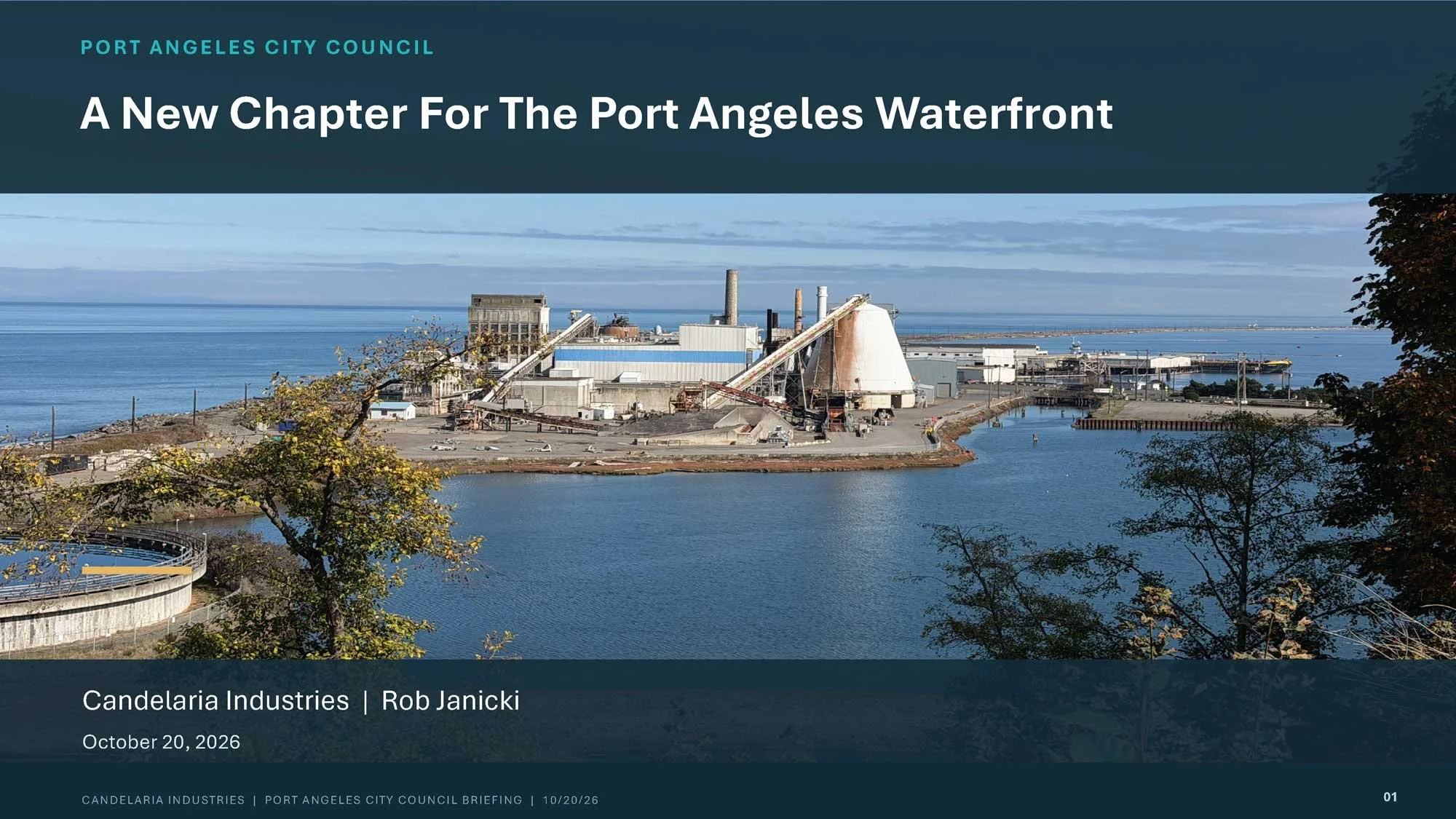
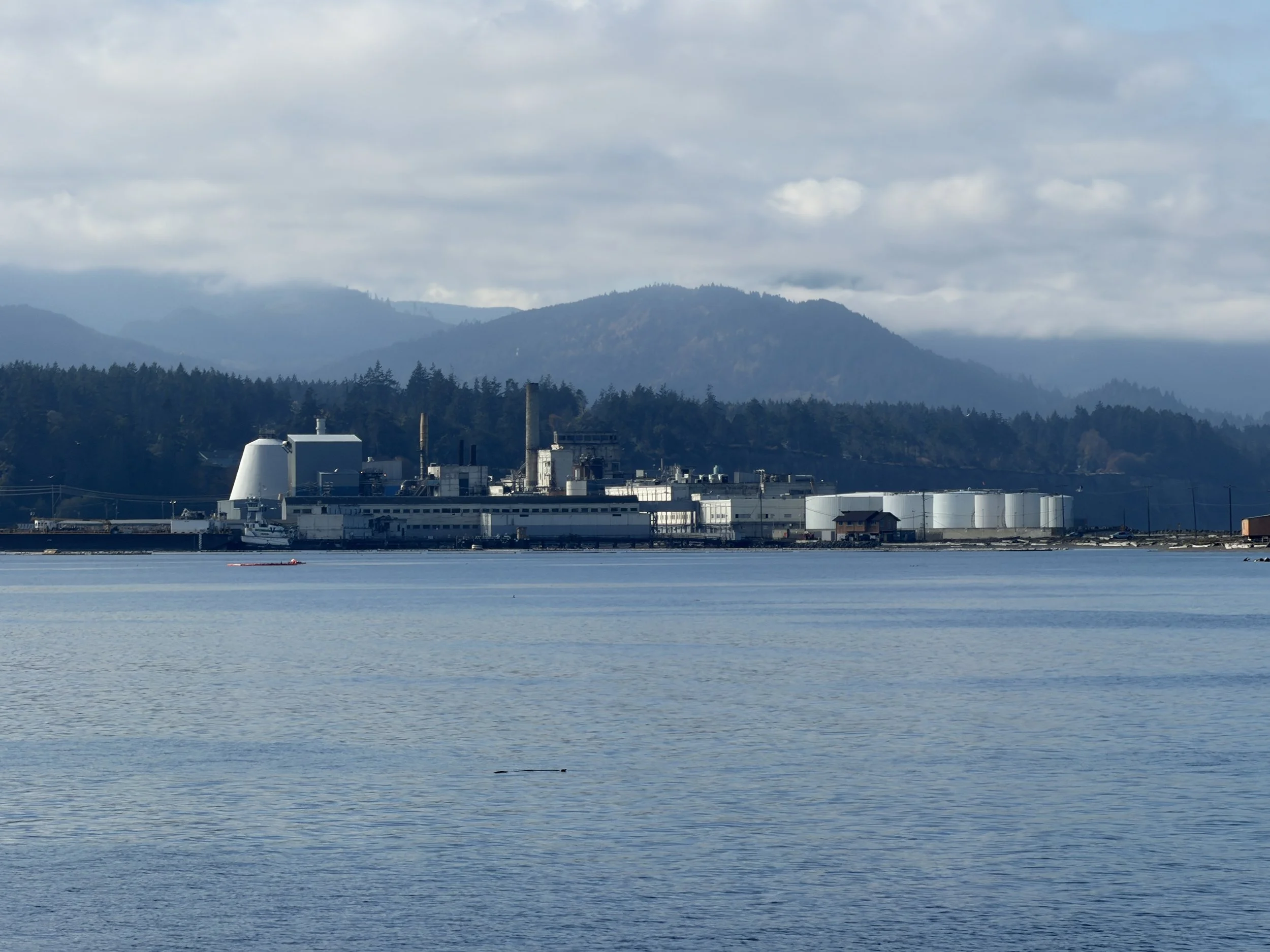
Candelaria Industries is evaluating the redevelopment of the former McKinley paper mill in Port Angeles. Following our October 20 presentation to the City Council, we are answering questions raised by Council members and the community.
The project remains in the planning stage. Information will be updated as technical evaluations progress and additional details become available.
Project Overview
1. What is Candelaria proposing for the former McKinley mill?
Our long-term vision is to redevelop the property as a diversified industrial campus, reusing existing buildings, utilities, marine facilities, and other industrial infrastructure.
Likely tenants include individual businesses in the following industry sectors: wood products and biomass energy, marine industries, aquaculture, technology, and other complementary businesses.
The proposed initial phase includes three compact modular computing pods intended to establish a source of working revenue for reinvestment in the property.
Restarting the cogeneration facility is also planned as part of the first phase, with initial electrical generation estimated at approximately 8–10 MW.
To reiterate, the property acquisition, redevelopment activities, and applicable approvals have not been completed.
Computing, Electricity & Expansion
2. Why are modular computing pods part of the redevelopment plan?
Rehabilitating a former paper mill requires substantial investment. Existing buildings and infrastructure need inspection, repair, modernization, and adaptation before they can support new industrial uses.
The initial computing installation is intended to establish dependable revenue that can help finance these improvements and support future redevelopment.
We view the computing operation as a financial foundation for the broader industrial vision, rather than the principal long-term source of employment on the property.
3. Could the modular computing pods be used for artificial intelligence?
Yes. The proposed modular computing pods could be used for artificial intelligence, but they could also be used for many other purposes, such as evaluating and storing MRI data.
The initial concept involves leasing computing capacity to tenants. Specific tenants and their computing activities have not been announced. Potential applications could include conventional business computing, data processing, medical research, cloud services, or AI-related workloads. We cannot represent that AI computing would be excluded when specific tenants and uses have not yet been established.
The pods' physical configuration differs considerably from a large, multi-building hyperscale campus, but they would still provide commercial computing capacity.
4. How large would the initial computing installation be?
The proposed first phase consists of three containerized computing modules, each approximately 13 feet wide and 53 feet long.
Together, the three modules would occupy approximately 2,067 square feet within an existing 21,000-square-foot industrial building with thick concrete walls and no windows.
In future phases, Candelaria currently envisions no more than six additional containers, for a total of nine modules within the existing building.
No new multi-building data-center campus is being proposed at the McKinley site.
Although the installation has a relatively small physical footprint, it would still require significant electrical service. Physical size and electricity consumption are separate considerations.
5. How much water would the computing installation require?
The proposed computing modules would use a closed-loop, air-cooled system rather than an evaporative cooling tower.
The basic principle is similar to an automobile radiator: coolant circulates through a closed system and transfers heat to the surrounding air.
This configuration is designed to require no routine water withdrawal for cooling. Other limited water needs associated with site operations would be evaluated separately.
6. How much electricity would the computing installation use?
Candelaria's initial request is for approximately 9.9 average megawatts (aMW) of electrical service through the City of Port Angeles.
The former paper mill has an electrical substation rated for approximately 70 megawatts. That infrastructure is one reason the property is being considered for redevelopment.
However, the substation's historical capacity does not mean an equivalent amount of electricity is currently available or that Candelaria has already received an electrical allocation.
Candelaria's current plan provides for a maximum of nine modular computing pods within the existing 21,000-square-foot industrial building, with total computing demand not exceeding 22.5 MW.
The broader, long-term redevelopment vision anticipates additional industrial tenants whose combined electrical requirements could eventually bring total site demand to approximately 70 MW. This is a long-term objective, not an existing electrical allocation or an approved level of service.
Candelaria is also evaluating the potential for on-site cogeneration to supply a portion of future electrical demand. The amount available and any necessary utility arrangements have not yet been established.
7. Would Candelaria's electricity demand increase utility rates for residents?
Protecting existing utility customers from additional costs attributable to Candelaria's operations is an important priority.
Candelaria has proposed covering Bonneville Power Administration Tier 1 cost increases attributable to its operations. The objective is to prevent shifting those additional costs to other utility customers. Candelaria would also be responsible for the cost of all new electrical interconnection infrastructure required specifically to serve its operations between the mill site and the BPA substation. The scope and technical requirements of that work would be established in coordination with the City and BPA.
The details of any electrical-service agreement, including cost allocation and protections for existing customers, have not yet been finalized or approved. Candelaria is committed to working with the City to establish appropriate protections through that process.
In addition, at the proposed maximum computing capacity of 22.5 MW, Candelaria estimates that its electrical consumption could generate approximately $600,000 annually in utility tax revenue for the City of Port Angeles. Actual revenues would depend on electricity consumption and applicable tax rates.
We recognize that residents want documented protections, not simply assurances. These matters will need to be addressed through the City's utility review and agreement process.
8. Could the computing installation expand and require additional electricity?
The initial proposal presented to City Council involves three computing modules and a request for 9.9 average megawatts of electrical service.
Candelaria's proposed maximum for the modular computing installation is nine pods, with a combined electrical demand not exceeding 22.5 MW. All nine would be housed within the existing 21,000-square-foot industrial building.
This limit applies specifically to the modular computing installation, not to other potential industrial activities or tenants on the property.
Any expansion beyond the initially approved electrical-service level would require additional review and authorization by the City of Port Angeles. Expansion would also be subject to applicable land-use, environmental, utility, and permitting requirements.
9. What about the City's data-center moratorium?
On September 1, 2026, the Port Angeles City Council adopted a six-month moratorium on the acceptance, processing, and approval of facilities whose principal use is digital data processing, storage, management, or transmission.
The moratorium allows the City to evaluate potential impacts and develop regulations through a public process.
Candelaria recognizes the City's authority to determine how these requirements apply to the proposed installation and intends to participate in the applicable review process.
The October 20 City Council presentation was informational. It did not result in approval of a data-center development or electrical-service agreement.
Cogeneration & Industrial Water Use
10. What is the plan for restarting the biomass cogeneration plant?
The property includes an existing biomass cogeneration facility that previously produced electricity and steam from wood residuals.
Candelaria intends to return it to productive use, potentially creating a local market for residual materials from regional wood-processing operations.
The turbine configuration, steam requirements, cooling system, operating costs, permits, and fuel-supply arrangements remain under technical evaluation.
Future electrical generation could be substantial relative to the initial computing demand. However, the cogeneration plant is not currently operating, and its eventual output and relationship to the City's electricity supply have not been established.
It would therefore be premature to describe future generation as a guaranteed offset to Candelaria's electricity purchases.
11. What about water requirements for cogeneration and future industrial tenants?
Water requirements for the proposed biomass cogeneration restart and other potential industrial uses are separate from those of the initial computing installation.
The cogeneration facility would require water for its steam-generation process, with additional cooling requirements depending on the final equipment configuration. Candelaria is evaluating alternatives intended to minimize water consumption.
Future industrial tenants could have substantially different water needs depending on their operations. Those requirements cannot be determined until specific businesses and uses are identified.
Any proposed water use would need to be evaluated against available supplies, existing water rights, and applicable City and state requirements. Additional authorizations may be necessary depending on the source and intended use.
Candelaria's objective is to make productive use of the property's existing industrial infrastructure while minimizing water consumption and respecting the community's water resources.
Community Impacts & Future Development
12. What about noise, traffic, and other environmental impacts?
The initial computing modules would be located inside an existing industrial building, which can help contain equipment noise. Nevertheless, actual noise levels and compliance at applicable property boundaries need to be established through project evaluation.
Other proposed activities could have different impacts.
For example, restarting the biomass cogeneration facility would involve wood-residual deliveries, materials handling, equipment operation, and air-emissions requirements. Those impacts would need to be addressed as part of evaluating that operation.
Candelaria intends to comply with applicable noise, environmental, land-use, and permitting requirements. We will share further technical information as it becomes available.
Marine Drive is a City right-of-way. It has never been closed to the public and would not be closed in the future as a result of development by Candelaria.
13. How many jobs would the redevelopment create?
Rehabilitation of the property could create opportunities for regional electricians, millwrights, pipefitters, welders, construction contractors, engineers, environmental professionals, and other skilled trades.
The computing installation itself is not expected to be the primary long-term employment generator for the property. Its principal economic role is to establish revenue that could help support additional industrial development.
Restarting the cogeneration facility is expected to create 30–40 high-wage jobs with benefits. Additional indirect jobs could be retained or created in industries such as trucking and sawmilling.
Future businesses could create additional employment, but those opportunities depend on attracting tenants, financing improvements, and securing required approvals.
We do not yet have a substantiated estimate of permanent jobs across the proposed campus and do not want to present speculative employment figures as commitments.
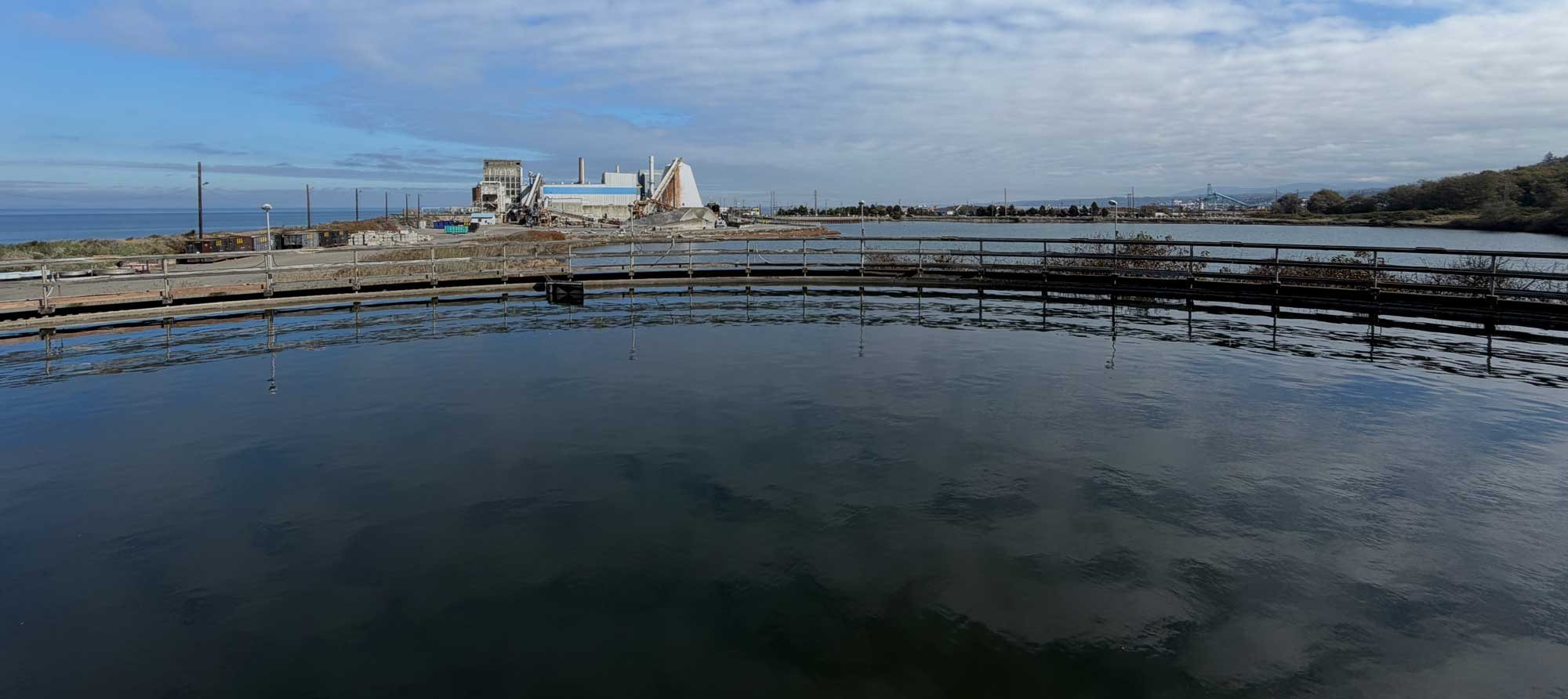
14. What are Candelaria's plans for the lagoon and shoreline?
Candelaria recognizes the environmental and cultural significance of the waterfront, including the former mill lagoon.
Rob Janicki has met with representatives of the Lower Elwha Klallam Tribe and has described an interest in exploring lagoon restoration with consideration for the Tribe's perspectives.
Candelaria has also engaged Natural Systems Design to begin evaluating possibilities for the lagoon.
The scope, financing, permitting, and implementation of any future restoration project remain to be determined. These discussions should not be interpreted as formal tribal endorsement of the overall redevelopment proposal.
Candelaria also met with Dave Upthegrove, Commissioner of Public Lands and head of the Washington State Department of Natural Resources, and his staff. The teams explored a long-term vision for the site, including removal of an over-water warehouse supported by hundreds of creosote-treated pilings.
15. How will future development be reviewed?
The October 20 presentation outlined a long-term vision rather than a fully designed industrial campus with committed tenants.
Specific projects will require evaluation under applicable City, state, and federal requirements. Depending on the proposal, reviews may address land use, environmental impacts, utilities, shoreline conditions, transportation, building permits, and other considerations.
The City and relevant regulatory agencies determine the required review process.
Candelaria recognizes the community's interest in understanding both individual project impacts and the cumulative effects of redevelopment across the property.
16. How can residents learn more or ask questions?
We encourage community members to review the October 20 City Council presentation and meeting recording, available through our Project Updates section.
We welcome questions, concerns, and suggestions through the contact form on this website.
As technical evaluations progress and additional decisions are made, we intend to provide updates so residents and other interested parties can follow the project's development.
Contact Candelaria
View Project Updates
Visit the City of Port Angeles Meetings & Agendas
This FAQ describes Candelaria Industries' current proposals and intentions as of October 22, 2026. Project details remain subject to further study, agreements, regulatory review, and applicable approvals.